
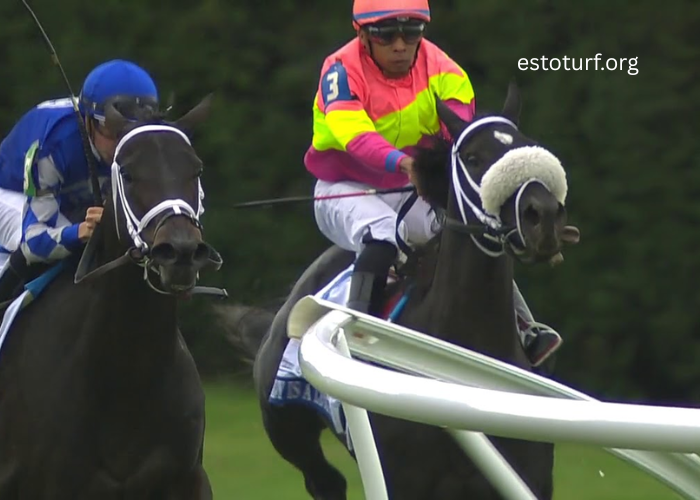
If you have ever stood by the track during a big race, you’ve probably heard the roar of the crowd as the horses turn for home. In those high pressure moments, everyone is looking at the leaders, but seasoned gamblers and horsemen are often looking at something else entirely. They are looking at the rail. In turf racing, the rail isn’t just a physical boundary made of white plastic or metal. It is a strategic focal point that can determine the difference between a glorious win and a frustrating loss. It’s funny how a simple fence can dictate the entire flow of a race, but on the grass, the rail is practically a character in its own right.
The Shortest Path to Victory
The most basic reason the rail matters is pure geometry. Any track coach will tell you that the inside lane is the shortest way around the oval. If a horse is tucked up against the rail, they are covering the exact distance of the race. Every foot a horse moves away from that inside line means they are actually running further than their competitors. Over a mile or a mile and a half, being stuck three or four wide around the turns can add dozens of feet to a horse’s trip. You’ll often see a jockey take a massive gamble by staying behind a wall of horses just to keep that inside position. They are betting that a gap will open up because they know that swinging wide might cost them the energy they need for the final lunging sprint.
Fresh Ground and Lane Shifts
One thing that makes turf racing very different from dirt racing is how the surface actually wears down. Throughout a racing meet, the constant pounding of hooves tears up the grass. Usually, the ground right next to the rail gets chewed up first because everyone wants to be there. This is why you’ll see track officials move the rail inward or outward between race days. By shifting the rail out perhaps ten or twenty feet, they provide the horses with a “fresh” strip of grass that hasn’t been trampled. As a fan, it is really important to pay attention to where the rail is set for the day. Sometimes, the inside path is actually slower because it is boggy or uneven, and the “rail” that matters is actually a few lanes out where the footing is firmer.
The Bravery of the Inside Move
There is a certain kind of magic in seeing a jockey “thread the needle” along the fence. It takes a huge amount of trust between the rider and the horse. When you are pinned against the rail, you have nowhere to go if the horse in front of you slows down. It can feel a bit claustrophobic, I imagine. Jockeys like Calvin Borel in filiere turf became legends by sticking to the rail no matter what, earned through a mix of patience and nerves of steel. Sometimes the rail is called the “glory hole” because when it opens up, it looks like a clear highway to the winner’s circle. But if it stays shut, you’re basically stuck in traffic while the horses on the outside sail past. It’s a high stakes game of chess played at forty miles per hour.
Protecting the Lead and Cutting Off Slopes
When a horse is in the lead and manages to get over to the rail, they gain a psychological advantage. Horses are herd animals, and having that solid barrier on one side can actually help them stay straight and focused. It also makes it much harder for challengers to pass. If you have the rail, you own the “pole position.” Anyone trying to get by you has to go around your outside, which again, forces them to run more ground. I’ve noticed that some horses seem to lean toward the rail almost like a security blanket. It gives them a sense of direction and helps them navigate the turns without drifting out into the middle of the track where the wind and the noise are more intense.
Weather and Drainage Near the Fence
Weather plays a massive role in how the rail behaves. Because most turf courses are slightly cambered to allow for water runoff, the area near the rail can sometimes become the wettest part of the track after a heavy rain. If the drainage isn’t perfect, the inside can turn into a “dead rail,” which is essentially a strip of mud that sucks the energy out of a horse’s legs. In these cases, you’ll see jockeys doing everything they can to stay away from the fence. They will hunt for the “crown” of the track where the ground is drier. It’s fascinating to watch a whole field of horses avoid the rail like it’s electrified, all because the ground there has lost its bounce.
A Satisfying Conclusion to the Inside Game
At the end of the day, the rail is the silent strategist of every turf race. It offers a shortcut for the brave, a trap for the unlucky, and a shifting puzzle for the trainers. Understanding its role helps you appreciate the subtle nuances of the sport. It isn’t just about who has the fastest horse, but who uses the architecture of the track most effectively. Whether the rail is providing a path to victory on a sunny afternoon or acting as a muddy obstacle after a storm, it remains the most important line on the grass. Next time you’re watching a race, keep an eye on that white fence. You might just see the winning move happen before the horses even reach the stretch.