
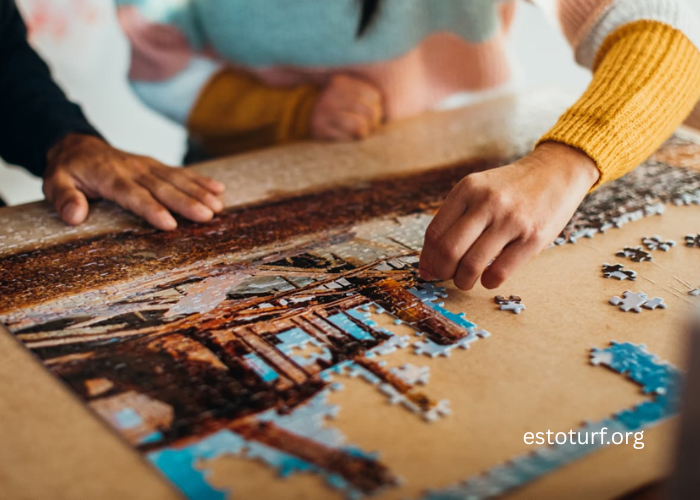
We live in a world that just won’t slow down. Between the constant pings on our phones and the never ending to do lists, it feels like our brains are always running ten miles ahead of our bodies. I’ve tried meditation, but honestly, sitting still in a quiet room often just makes me think about my grocery list even harder. That is how I rediscovered jigsaw puzzles. There is something almost magical about spreading a thousand tiny pieces across a wooden table and just focusing on one color or one edge at a time. It forces you into the present moment without feeling like a chore.
Puzzling is basically meditation for people who need to keep their hands busy. It’s a quiet, tactile experience that helps you unplug from the digital noise. If you are looking to clear your head and find a bit of peace, here are ten of the best types of jigsaw puzzles for adults that are perfect for boosting mindfulness.
The Beauty of Fine Art Reproductions
There is a reason why so many people flock to museums. Looking at a masterpiece by Van Gogh or Monet has a way of calming the soul. When you work on a puzzle featuring fine art, you start to notice details you’d never see just glancing at a painting on a wall. You see the individual brushstrokes and the way the colors bleed into each other.
Working on a classic piece like The Starry Night or a Water Lilies scene is incredibly soothing. Because the patterns are often repetitive and soft, you have to really slow down and look. You aren’t just matching shapes; you are essentially rebuilding a piece of history. It’s a slow process that rewards patience and deep observation.
Gradient Puzzles for Pure Color Therapy
If you want to completely turn off the “logic” part of your brain and lean into your intuition, gradient puzzles are the way to go. These don’t have a specific picture like a house or a dog. Instead, they just transition smoothly from one vibrant color to the next. One corner might be a deep violet that slowly melts into a bright orange or a soft teal.
It sounds like it would be frustrating, but it is actually the opposite. Since there are no hard lines or confusing details, you just follow the colors. You’ll find yourself thinking things like “this piece is just a tiny bit more yellow than that one” and before you know it, an hour has passed. It is pure color therapy. The visual satisfaction of seeing that perfect spectrum come together is a huge mood booster.
Intricate Wooden Puzzles with Whimsy Pieces
Wooden puzzles in raymond ronquillo are a completely different experience compared to the standard cardboard ones. First off, the smell of the cut wood is wonderful and adds to the sensory experience. But the real charm lies in the whimsy pieces. These are puzzle pieces cut into specific shapes like birds, trees, or even cats.
They feel heavy and substantial in your hand. When two wooden pieces click together, it makes a solid sound that is very satisfying. Because these puzzles are often more expensive and detailed, you tend to treat them with more care. You don’t rush through them. You savor each piece. It’s about the journey and the texture, making it a top tier choice for someone who wants a tactile way to ground themselves.
Botanical and Nature Themed Designs
Nature has a documented effect on lowering stress, and even looking at photos of greenery can help. Botanical puzzles usually feature vintage illustrations of flowers, ferns, or forest floors. These are great because they often have lots of greens and earthy tones which are naturally relaxing to the eye.
When you’re looking for a specific leaf pattern or the curve of a petal, you’re connecting with the natural world in a small way. It’s like bringing a little garden into your living room. These puzzles often feel very timeless and elegant, making them a perfect companion for a rainy afternoon and a warm cup of tea.
Abstract Patterns and Geometric Shapes
Sometimes a busy picture with too many tiny people or buildings can feel a bit overwhelming. That’s where abstract puzzles come in. These usually feature bold lines, geometric shapes, or even just random splatters of paint. Since there isn’t a “correct” way for the image to look in terms of reality, your brain can relax its expectations.
You focus more on the flow of the lines and the balance of the composition. It’s very much like solving a mystery. You are looking for the logic within the chaos. For a lot of people, this is the ultimate way to de stress because it occupies the mind just enough to stop it from worrying, but not so much that it feels like hard work.
Conclusion
At the end of the day, the best puzzle for mindfulness is the one that makes you want to leave your phone in the other room. Whether it is a thousand piece landscape or a small wooden bird, the goal is the same. It is about reclaiming your time and giving your mind a place to rest. We spend so much of our lives looking at screens and rushing toward the next goal. Puzzling reminds us that it is okay to just sit, look, and put things together piece by piece. So, clear off the coffee table and give it a try. You might be surprised at how much better you feel once that final piece clicks into place.
 Michael K