
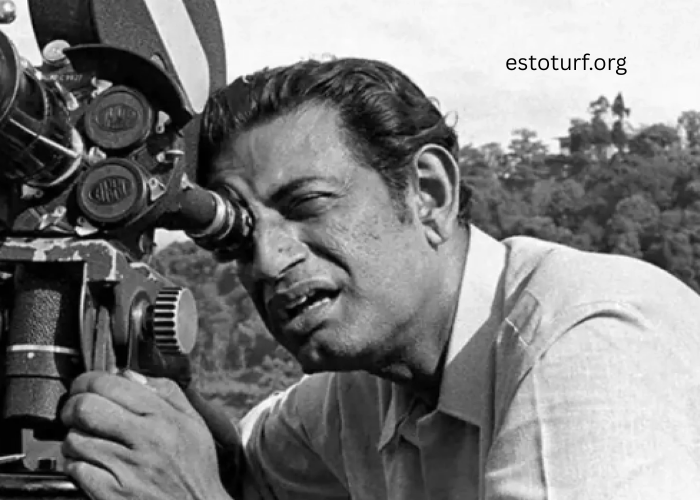
When people talk about the greatest filmmakers to ever walk this earth, a few names always pop up. You hear about Spielberg, Hitchcock, or Kurosawa. But if you really dig into the history of movies, there is one name that holds a special kind of reverence among directors and film students alike. That name is Satyajit Ray. He wasn’t just a director from India who made some good movies; he was a giant who changed the way the world looked at storytelling on screen. Even today, decades after his most famous works were released, you can still see his fingerprints on modern movies from Hollywood to Japan.
A New Way of Seeing Reality
Before Ray came along, many movies were quite loud or overly theatrical. Then, in the mid fifties, he released Pather Panchali. It was part of what we now call the Apu Trilogy. It was a complete shock to the system for international audiences. Why? Because it was so incredibly quiet and real. It didn’t have big dance numbers or melodramatic villains. It just showed the life of a young boy in a small village in Bengal.
Ray had this amazing ability to find the beauty in the mundane. He could make a scene of a child running through a field of tall grass feel like the most important thing in the world. This “humanist” approach really resonated with directors in the West. It taught them that you don’t need a massive budget or a complicated plot to move an audience. You just need a camera and a deep understanding of human emotions. It’s that simplicity that makes his work feel so timeless even now.
Inspiring the Legends of Hollywood
It is actually quite fun to see how many famous American directors credit Ray as a major influence. Martin Scorsese, for example, has spoken many times about how Ray’s films were a revelation for him. He even helped restore some of Ray’s old prints so that younger generations could see them. Then you have Wes Anderson, who famously dedicated his film The Darjeeling Limited to Ray. If you look closely at Anderson’s work, you can see the influence in the way he frames shots and uses music.
Even George Lucas and Steven Spielberg have acknowledged his impact. There is a long running story in the film industry that Spielberg’s E.T. was actually inspired by a script Ray wrote years earlier called The Alien. Whether that is true or not is still debated, but the fact that the two are even mentioned in the same breath shows just how much respect Ray commanded in Hollywood. He showed the world that a story set in a specific, local context could still be understood by everyone, everywhere.
The Master of Every Craft
One thing that always blows my mind about Satyajit Ray movies in yup movies is that he didn’t just direct. The man was a polymath. He wrote the screenplays, he composed the music, he designed the sets, and he even did the calligraphy for the titles. He was a complete artist in every sense of the word. Most directors rely on a huge team to handle those things, but Ray had a very specific vision that he wanted to control from start to finish.
This “auteur” style of filmmaking became a blueprint for independent directors across the globe. He proved that if you have a strong vision, you can wear many hats and create something that is totally unique. His musical scores were particularly influential. He blended Indian classical instruments with Western styles in a way that felt completely natural. It wasn’t just background noise; the music was a heartbeat for the story.
Changing the Face of Indian Cinema
While his global influence is massive, we can’t forget what he did for movies in his own country. Ray was one of the pioneers of the Parallel Cinema movement in India. This was a direct alternative to the mainstream commercial movies that were popular at the time. He opened the doors for other realistic filmmakers to tell stories about social issues, poverty, and the changing roles of women in society.
He didn’t shy away from difficult topics, but he handled them with a lot of grace and dignity. He never looked down on his characters. Instead, he walked beside them. This sense of empathy is something that many modern Indian directors still try to emulate. He made it okay to be subtle. He showed that silence on screen can often say much more than a page of dialogue.
A Legacy That Never Fades
If you ever get the chance to sit down and watch one of his films, like Charulata or The Music Room, you’ll see that they don’t feel “old” in the way some black and white movies do. They feel alive. Ray’s focus was always on the universal human experience. Things like jealousy, curiosity, grief, and joy don’t have an expiration date.
His influence is like a quiet river that keeps flowing underneath the surface of modern cinema. You might not always see it directly, but it is there in the pacing of a scene or the way a director chooses to focus on a character’s eyes. He taught us that cinema is a language of the soul. Because of him, the world became a little smaller, and our understanding of each other became a little deeper. He wasn’t just an Indian filmmaker; he was a gift to the entire world of art.